Why consistency may not be the problem — and what I’m working on next
Closing the Gap – Part 1
I should start with a little context. I’m still pretty new to all of this. I’ve got about a year of HPDE experience, no racing background, and I’m very much still figuring things out. So nothing here is meant to sound authoritative. This is just what the data is showing me right now, and I’m always open to suggestions from people who’ve been doing this longer and know better.

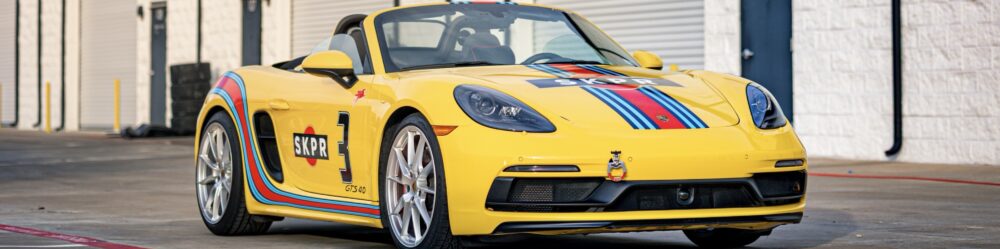
After reviewing a recent session in my 718 Boxster GTS 4.0, a few things stood out pretty quickly.
The headline numbers actually looked encouraging. My best lap was a 2:24.47. The Optimal Lap showed a 2:19.69. And my Top 3 variability came in at 0.29 percent, on a dry track. That variability number matters more than I realized early on. Being under half a percent means the pace is repeatable. This wasn’t a lucky lap or a one-off moment where everything magically lined up. Whatever speed I’m driving at now is something I can reproduce fairly consistently.
So that naturally led to the next question: if consistency is already there, where do the missing four to five seconds actually live?

– Not in bravery.
– Not in equipment.
– And not in just trying harder.
They live in how efficiently I’m using the car.
Low variability rules out a lot of the usual explanations. It’s not fear on the straights, since I’m seeing north of 126 mph. It’s not random mistakes, traffic, or wildly different laps. And it’s not a lack of rhythm. This is the stage where the lap feels good. The car feels good. But the stopwatch is still politely reminding you there’s more on the table.
That’s been my cue to stop asking “can I go faster?” and start asking “what am I leaving on the table?”
The biggest area I’m working on right now is brake release timing. Like most people, I spent a lot of time thinking about braking points. But the data suggests the bigger opportunity isn’t braking later, it’s braking less long. Hanging on the brakes too deep keeps weight on the nose longer than necessary, delays rotation, and pushes throttle application later than it needs to be. Faster laps don’t always brake later. They release earlier and let the car rotate sooner. Any time I feel like I’m waiting at the apex, that’s usually time quietly slipping away. The simple reminder I’m trying to keep in my head is to release the brake sooner, not harder.
Throttle commitment on corner exit is the next big piece. In a naturally aspirated car like the 4.0, throttle really is time. What I see in the data, and recognize after the fact, is getting to throttle early but not committing to full throttle quite fast enough. It doesn’t feel dramatic in the moment, but that hesitation compounds all the way down the next straight. Even a brief delay at corner exit can cost more than you expect by the next braking zone. The cue I keep repeating is that if I can unwind the steering wheel, I owe the car throttle.

Then there’s line precision. This isn’t about learning a new racing line. It’s about execution. Missing an apex by a foot doesn’t feel like much, but it adds steering angle, increases scrub, and delays throttle. Over an entire lap, those little misses add up. Consistency means I can hit the same line over and over. Now the goal is to make sure it’s actually the right line.
Finally, there are the micro-lifts I don’t always feel. These are the sneakiest. They tend to show up in fast kinks, over crests, or when there’s a lot going on mentally. I don’t remember lifting, but the speed trace does. Each one is small, but together they quietly turn into seconds.
Instead of trying to fix everything at once, I’m trying to be more intentional. I’ll pick one corner type per session, like heavy braking corners, fast sweepers, or slow exits. I’ll focus on one behavior at a time, either earlier brake release or faster throttle commitment. And I’ll ignore lap time during the session. Afterward, I force myself to write one sentence per corner. Brake off earlier. Commit earlier. Late apex next time. If I can’t say the fix in one sentence, I’m probably overthinking it.
Low variability combined with a big gap to the Optimal Lap is actually encouraging. It means the pieces are already there, they just haven’t been connected yet. I’m still learning, and I’m genuinely open to feedback from instructors, coaches, and fellow drivers who’ve been down this path before. If you see something different in the data or think I’m chasing the wrong thing, I’d love to hear it.
For now, the focus is simple. Earlier brake release. Faster throttle commitment. Cleaner exits. That’s where I think the next seconds will come from.
For a little extra context, this is where the lap currently sits on the Catalyst leaderboard. It’s not a benchmark or a goal, just a snapshot of where I am right now in the bigger picture.


About the “Closing the Gap” Series
This post kicks off a recurring series where I document the process of turning consistency into speed. The idea is simple: use real data, honest self-assessment, and feedback from others to close the gap between current pace and potential pace.
Future posts in the series will focus on:
Brake release vs braking points Throttle timing and exit speed Corner-by-corner execution Micro-lifts and mental bandwidth Translating data into simple on-track cues What actually changes as lap times drop
Each entry will be one step in the process, not a finished answer.