Not every change to a Porsche involves horsepower, suspension upgrades, or chasing lap times.
Sometimes it’s about enabling technology that the car already has but that isn’t fully utilized from the factory.
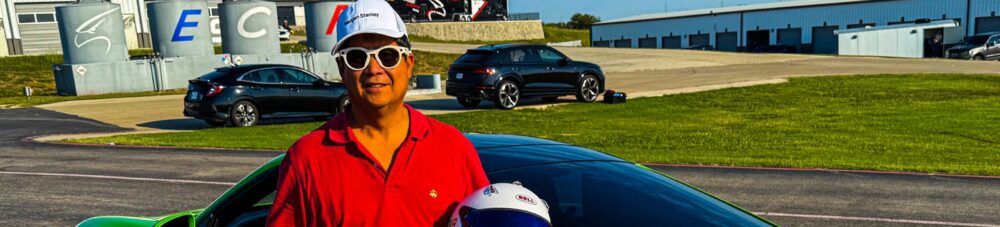
Several weeks ago, before I had to travel, I brought my 2020 Porsche 992.1 Carrera 4S — better known as the Lizard — to MC Squared Auto for a bit of programming to activate the full Matrix LED headlight functionality.

My car came equipped from the factory with LED-Matrix Design Headlights including PDLS+. The hardware is already installed. The segmented LED arrays are built into the headlight units, and the camera system that allows the car to detect other vehicles and adjust the light pattern is already integrated into the vehicle.
However, Porsche does not activate full Matrix functionality on cars destined for the United States.
In 2022, the National Highway Traffic Safety Administration approved adaptive driving beam systems for use in the United States. These systems allow headlights to dynamically adjust their beam pattern to avoid blinding oncoming drivers while still providing maximum illumination of the road ahead.
This technology is commonly referred to as adaptive driving beams or glare-free high beams.
Despite that regulatory approval, Porsche has continued to ship U.S.-market cars with the Matrix hardware installed but without the full functionality activated.
In practical terms, that means the capability exists in the car but is simply not enabled in the software.
When fully active, Matrix headlights allow the high beams to remain on while portions of the light pattern are dynamically shaded around other vehicles. Instead of switching between high beams and low beams, the system continuously adjusts the beam pattern, creating dark zones around other drivers while keeping the rest of the road brightly illuminated.
The result is better visibility without blinding anyone else on the road.
I found several people on the Rennlist forums who were willing to perform the activation. There were also remote coders offering to handle the programming session remotely, and others who for a price offered to do the work at Porsche events around the country.
For many owners, that route works well.
But for me, there were a few questions.
If something went wrong, how would follow-up work? Would I need to wait until the next event? Was I comfortable giving someone remote access to my car’s electronics? What would happen if a control module became misconfigured or corrupted? What if the car became inoperable?
The 992’s electrical architecture is sophisticated and tightly integrated. Modern Porsches rely heavily on software coordination between multiple control units, and I wasn’t interested in turning the Lizard into a test case.
Michael at MC Squared had the proper PIWIS diagnostic equipment, experience working with modern Porsche platforms, and a strong reputation within the Porsche community.

Just as importantly, they’re local.
If something ever needs to be revisited or corrected, I know exactly where to go. That level of accountability gave me far more comfort than relying on remote access or event-based programming.
The activation process itself was straightforward, involving programming changes within the car’s control modules using Porsche’s factory diagnostic tools.
Evaluating the Matrix lighting, however, takes time. I have only been able to drive the car in the dark a couple of times since the activation, so there are still weeks of testing left to do. That said, I do believe the lights are working as intended.
In the past, when I left my high beams on automatic, the headlights would spend more time in regular beams than high beams when driving in an urban setting. There always seemed to be oncoming traffic or a car ahead that caused the system to switch back to low beams.
One early morning drive — still a couple of hours before daylight — made me notice something had changed.
My high beams rarely turned off.
They would dim or adjust when I pulled up close to someone at a traffic light, for example, but the rest of the time the high beams remained active even in the face of oncoming traffic. Instead of switching fully off, the light pattern appeared to adjust while maintaining strong illumination across the rest of the road.
Perhaps the most surprising part was that despite driving with what appeared to be active high beams facing oncoming traffic, no one flashed their headlights back at me in annoyance. That was a pretty strong early indication that the system was doing exactly what it was designed to do — maintaining maximum illumination while carefully masking other drivers.
That behavior is exactly what the Matrix system is designed to do.
Of course, a couple of drives is not nearly enough testing. I’m hoping to get more time behind the wheel after dark this weekend, ideally on rural roads where the system should be able to show its full capabilities.
After I’ve had a month or so of real-world experience with it, I’ll publish a follow-up post with more detailed observations.
For now, it’s simply satisfying to know that the Lizard is finally using the technology it was built with.
Sometimes Porsche ownership isn’t about adding something new.
Sometimes it’s about unlocking what was already there all along.